
Territoriality and solitary lifestyle
The most important thing to know when keeping hamsters is that they are territorial animals in the wild. The species known as pets, the most popular of which is the Syrian hamster, are very protective of their territory and only meet with their peers during mating season.
Placing several hamsters in one cage almost always ends tragically. Even if the young individuals seem calm at first, serious conflicts arise over space and resources as they grow older. The result is constant emotional stress, serious injuries, or even the death of one of the animals as a result of a fight. Therefore, it is necessary to provide each hamster with its own cage or terrarium.
The burrowing animal needs a spacious habitat and digging opportunities.
Hamsters are nocturnal and become active at dusk. Both a cage and a terrarium with glass walls are suitable for a hamster's habitat. The advantage of a terrarium is the high glass walls, thanks to which the litter stays inside the room and does not fly out of the habitat when digging. However, in the case of a terrarium, it must be ensured that the top is covered with a net or grid, which ensures free air circulation.
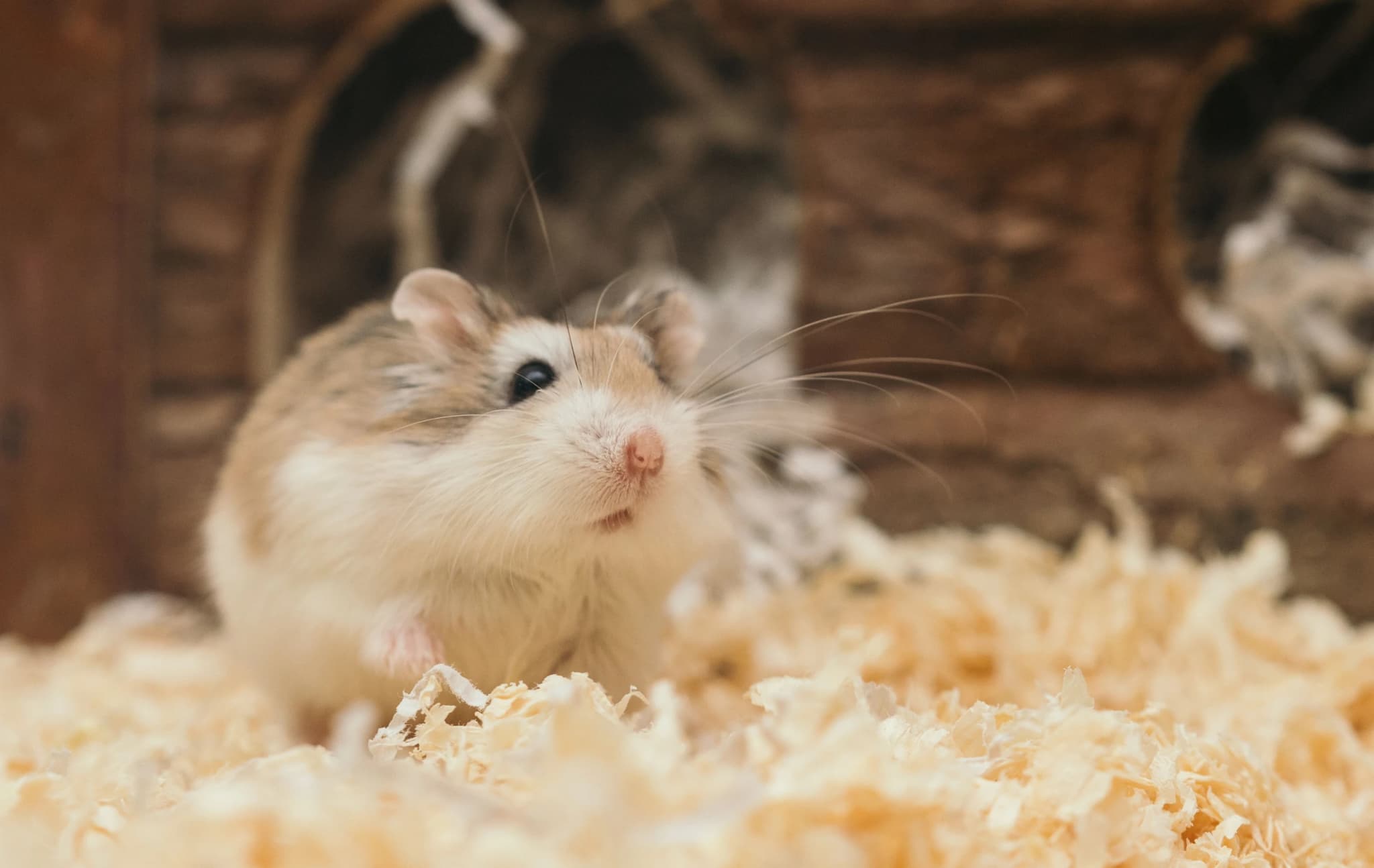
As burrowing animals, hamsters like to build tunnels, and for this purpose, it is worth keeping at least a 20-centimeter layer of dust-free wood chips or paper and cellulose-based bedding at the bottom of the cage or terrarium. It is also essential to add a running wheel of the appropriate diameter, with a smooth and closed running surface, to the habitat. A running wheel with a grid and sticks is dangerous for hamsters, because the animal's paws and claws can get caught between the sticks while running and break as a result.
Food table and hiding places
A hamster's diet is based on a varied mixture of seeds and grains, supplemented with fresh vegetables such as carrots, cucumbers or zucchini. Hamsters have large pockets in their cheeks, which they use to carry food to hiding places. To prevent fresh food from spoiling in the nest, it is worth giving them vegetables in moderation.
Occasionally, a hamster also needs a small amount of animal protein, such as dried mealworms or a piece of cooked, unseasoned chicken. Water should always be available to the hamster, and they drink water from a special bottle attached to the cage as well as from a regular bowl. If you are using a bowl to drink, it is worth choosing a heavier ceramic bowl so that the hamster cannot knock the bowl over with its teeth and wet the bedding.
Lifespan and daily maintenance
The average lifespan of hamsters is between 2 and 3 years. Since they are short-lived animals, a daily stress-free environment, proper nutrition, and regular cleaning of their habitat play an important role in their health and quality of life.
From sources
The article is based on the standards for keeping exotic pets in the Swiss Animal Protection Act and the guidelines for the care and hygiene of small animals from the Faculty of Veterinary Medicine, University of Edinburgh.