
Feeding: Designed to chew constantly
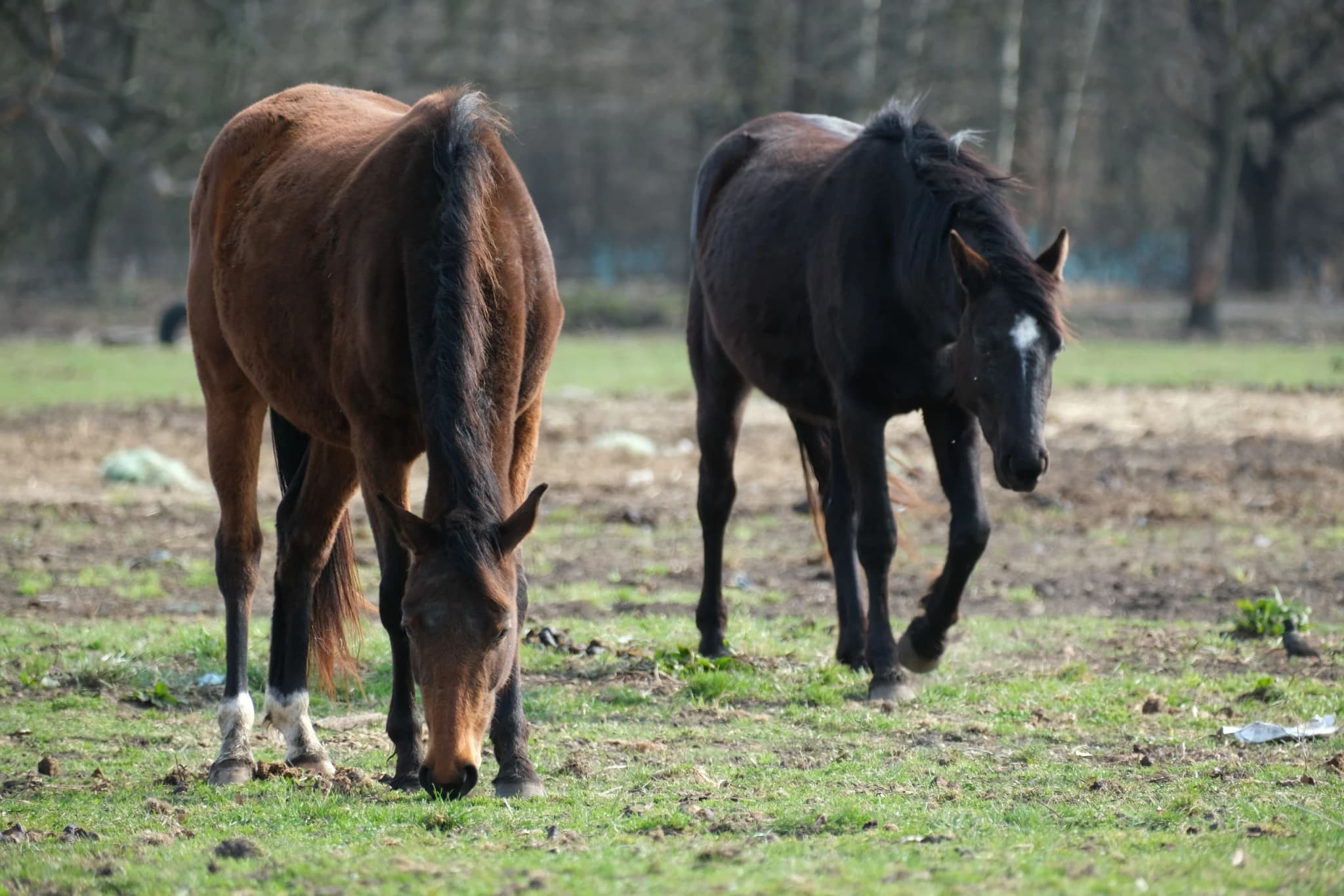
In the wild, a horse spends up to two-thirds of its day eating grass, constantly moving and chewing small portions. Its stomach is small and constantly produces acids, but its digestive tract requires a steady flow of fiber. This explains the most important feeding rule: the basis of a horse's diet must be fiber, such as hay or pasture grass. According to the recommendation, fiber should make up at least 60% of the daily ration, and a horse needs fiber of about 1.5–2% of its body weight per day. Grain and concentrates are only added when the workload actually requires it – not out of habit.
The most dangerous mistake is a sudden change. A horse's digestive system cannot tolerate sudden changes: a new batch of hay, an unexpected large portion of grain, or a sudden spring trip to lush pastures can trigger colic - a stomach ache that is one of the most common causes of death in horses. Therefore, all feed changes are made slowly, over several days or weeks, and spring grazing is started with short, 15-30 minute trips, which are gradually extended.
Laminitis: A Disease That Starts at the Food Bowl
Laminitis, or hoof inflammation, is one of the most painful and serious equine diseases and is often rooted in diet. Too much sugar and starch in feed – young succulent grass, grain, molasses-based feeds – is a known trigger, especially in overweight horses and animals with certain metabolic disorders. For prevention, low-sugar fiber, such as mature hay or soaked hay, and avoiding overweight are recommended. An important nuance: even a horse at risk of laminitis should not have its fiber intake reduced below about 1.5% of body weight without consulting a veterinarian, as starvation carries its own risks.
Teeth: grow throughout life
Horse teeth are not like ours – they grow and shift throughout their lives. Because horses chew grass in a circular motion, the enamel wears down unevenly and the sharp edges can cause sores and pain in the mouth. The result is a horse that eats slowly, drops feed, holds its head at an angle or resists when being ridden. This is why it is recommended to have your horse’s teeth checked by a veterinarian or dental professional at least once a year and have them filed if necessary. Very young and very old horses need more frequent monitoring.
Hooves: "no hoof, no horse"
The old blacksmith's adage "no hoof, no horse" captures the essence perfectly. Hooves are constantly growing and need regular maintenance, even when the horse is not working. Most horses need hoof maintenance about every six weeks, although the exact frequency depends on the workload: a horse in light work or on holiday may need maintenance less often, a riding horse more often, and a shod horse's shoes are usually replaced every four to six weeks. Daily cleaning and inspection of the hooves will help to spot stones, rot or injuries early.
Parasite control: less, but smarter
The way we think about deworming has changed significantly in recent years. In the past, all horses were dewormed on a fixed schedule year-round, but this has created a serious problem – drug resistance in parasites. Today’s recommendation, given by the American Association of Equine Veterinarians (AAEP), among others, is a strategic approach: perform a fecal analysis (called an egg count) to identify which horses are actually high parasite carriers, and deworm them first. The test is usually done once or twice a year, often in early spring before the peak of the infection season. This way, only those animals that need it are treated and the drugs remain effective for a longer period.
Vaccination
When it comes to horse vaccinations, there is one disease that stands out: tetanus, or lockjaw. Horses are particularly sensitive to tetanus, and even the smallest puncture wound in the hoof or foot area that has come into contact with the soil can be life-threatening. Therefore, the tetanus vaccine is considered a basic vaccine for horses, which is renewed regularly and, if necessary, after an injury. Depending on the horse's life and contacts - for example, if the animal competes or comes into contact with many other horses - the equine influenza vaccine is often added, which is renewed more frequently. The exact vaccination schedule is always drawn up by a veterinarian, taking into account the risks of the specific horse and the situation in the region.
When to call the vet
There are some signs in horses that you shouldn't wait for. Signs of colic – restlessness, frequent lying down and standing up, scraping, looking to the side, refusing to eat and no stool – require immediate action, as the condition can quickly worsen. It is also worth contacting a veterinarian if the horse is limping, does not want to lean on its leg, has a fever, coughs constantly or has a sudden change in appetite and behavior. The horse's size creates a deceptive sense of time – in reality, many equine diseases are dangerous precisely because they develop quickly.
Summary
The secret to a healthy horse is not in expensive supplements or miracle cures, but in consistency: a consistent fiber-based diet without sudden changes, regular hoof and dental care, smart parasite control, the right vaccines, and the owner’s ability to notice when something is different. Behind all of this is one principle – respect for how the horse was designed to live. And whenever in doubt, the most reliable advisor is a veterinarian who knows horses or an experienced specialist.